
Can You Drink Tap Water in Japan?


Tap water in Japan is safe to drink in all major cities and rural areas across the country. Japan's Waterworks Act enforces 51 water quality parameters, making Japanese tap water standards stricter than both the World Health Organization guidelines and the US Environmental Protection Agency requirements. Restaurants across Japan serve tap water to customers for free, and most Japanese residents drink tap water daily without filtering or boiling. Public water fountains in parks, train stations, and public facilities also provide safe drinking water from the same municipal supply. The one exception is temple and shrine fountains (手水舎, temizuya), which are intended for purification rituals, not drinking.
Japan's Water Treatment and Safety Standards
Japan's water treatment process uses multiple stages of purification before water reaches the tap. Raw water from rivers, dams, and underground reservoirs goes through coagulation, sedimentation, sand filtration, and chlorine disinfection. Tokyo's Bureau of Waterworks introduced advanced ozone and activated carbon filtration in the 1990s, which reduced chlorine taste while maintaining safety.
Japan's Drinking Water Quality Standards cover 51 parameters, including heavy metals, bacteria, and organic compounds. These standards are actually stricter than those applied to bottled mineral water sold in Japan, and some bottled water brands are simply filtered tap water. Chlorine residual in Tokyo tap water is maintained between 0.1 and 0.4 mg/L, well below the national limit of 1.0 mg/L.
Tap Water in Older Apartment Buildings
Japan's municipal water supply is safe at the source, but water quality can sometimes degrade inside older buildings. Apartment buildings constructed before the 1990s may have corroded pipes or poorly maintained rooftop water tanks (受水槽, jusuisou) that affect taste or appearance. A study published in Scientific Reports noted that the specified durability of water pipes in Japan is 40 years, but actual usage ranges from 40 to 70 years.
Many of these older apartment buildings use rooftop water tanks that store water before distributing it to individual units. These tanks require annual cleaning and inspection to prevent contamination. Newer and renovated buildings typically use direct-supply systems (直結給水, chokusetsu kyuusui) that deliver water straight from the municipal line to each unit, eliminating the storage tank variable entirely.
If you are renting an apartment in an older building, let the tap run briefly before drinking if the water has been sitting in the pipes overnight. This flushes any stagnant water that may have picked up impurities from the plumbing. Discoloration or a metallic taste are signs of pipe issues in your building's plumbing, not a problem with the municipal supply itself.
Soft Water, Filters, and Everyday Drinking
Tokyo tap water is classified as soft water, with a hardness of approximately 50 to 100 mg/L (calcium carbonate) according to the Bureau of Waterworks Tokyo Metropolitan Government. A study in Scientific Reports measured the mean hardness across 665 collection points in Japan at 48.9 mg/L. For comparison, London tap water averages around 200 to 300 mg/L, and much of the US Midwest exceeds 150 mg/L.
Foreigners moving from hard water countries like the UK, Germany, Australia, or parts of the US may notice the difference. Soft water produces more lather with less soap and shampoo, and hair and skin may feel softer than what you are used to. Kettles and appliances accumulate less limescale, and laundry detergent is more effective in smaller quantities.
Water filters are not necessary for safety, but many residents use them to improve taste. Faucet-mounted water purifiers (浄水器, jousuiki) are the most common type in Japanese apartments, with Toray Torayvino and Mitsubishi Cleansui being the most popular brands. These filters attach directly to the kitchen faucet and typically have a switch that toggles between filtered water (浄水) and regular tap water (原水). Replacement cartridges last approximately two to three months. If your Japanese apartment came with a filter faucet, check the switch position before assuming the water tastes different from what you expected.
Boiling tap water before drinking is also not necessary. Some households with infants boil water as an extra precaution, but this is not a government recommendation for the general population.
Moving to Japan? Choose Cove
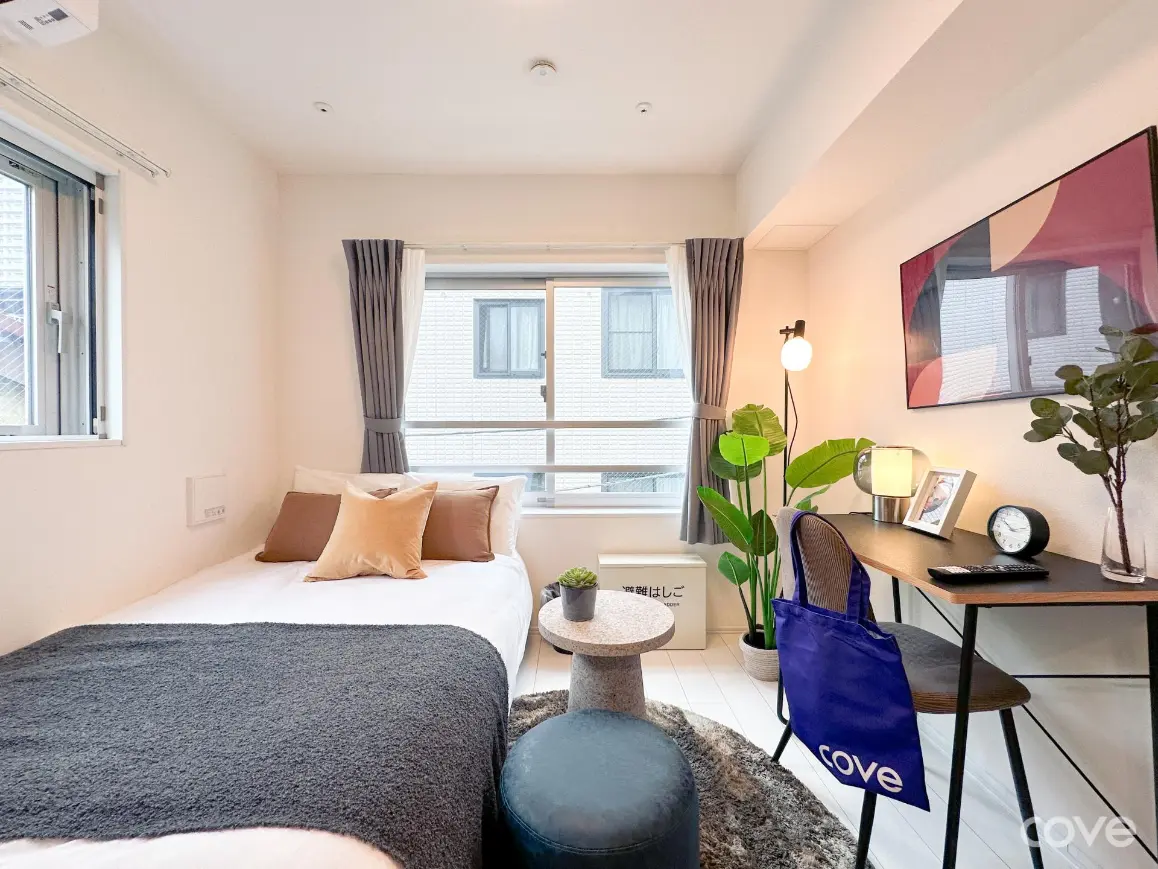
Cove offers fully furnished apartments and share houses across Tokyo's most popular neighborhoods, from the bustling streets of Shibuya to the historic charm of Asakusa. Every unit comes move-in ready with modern amenities, and no guarantor, no key money, and no Japanese bank account required.
Whether you are relocating for work, studying, or exploring life in Japan on a digital nomad visa, Cove makes settling in simple. Browse available rooms and find your Tokyo neighborhood today.