
1-Bedroom (1LDK) Apartments in Tokyo: When to Choose One
1LDK is Tokyo's most-rented layout for couples and remote workers, 30 to 50 sqm at ¥75,000 to ¥330,000/month. When and why to choose one.

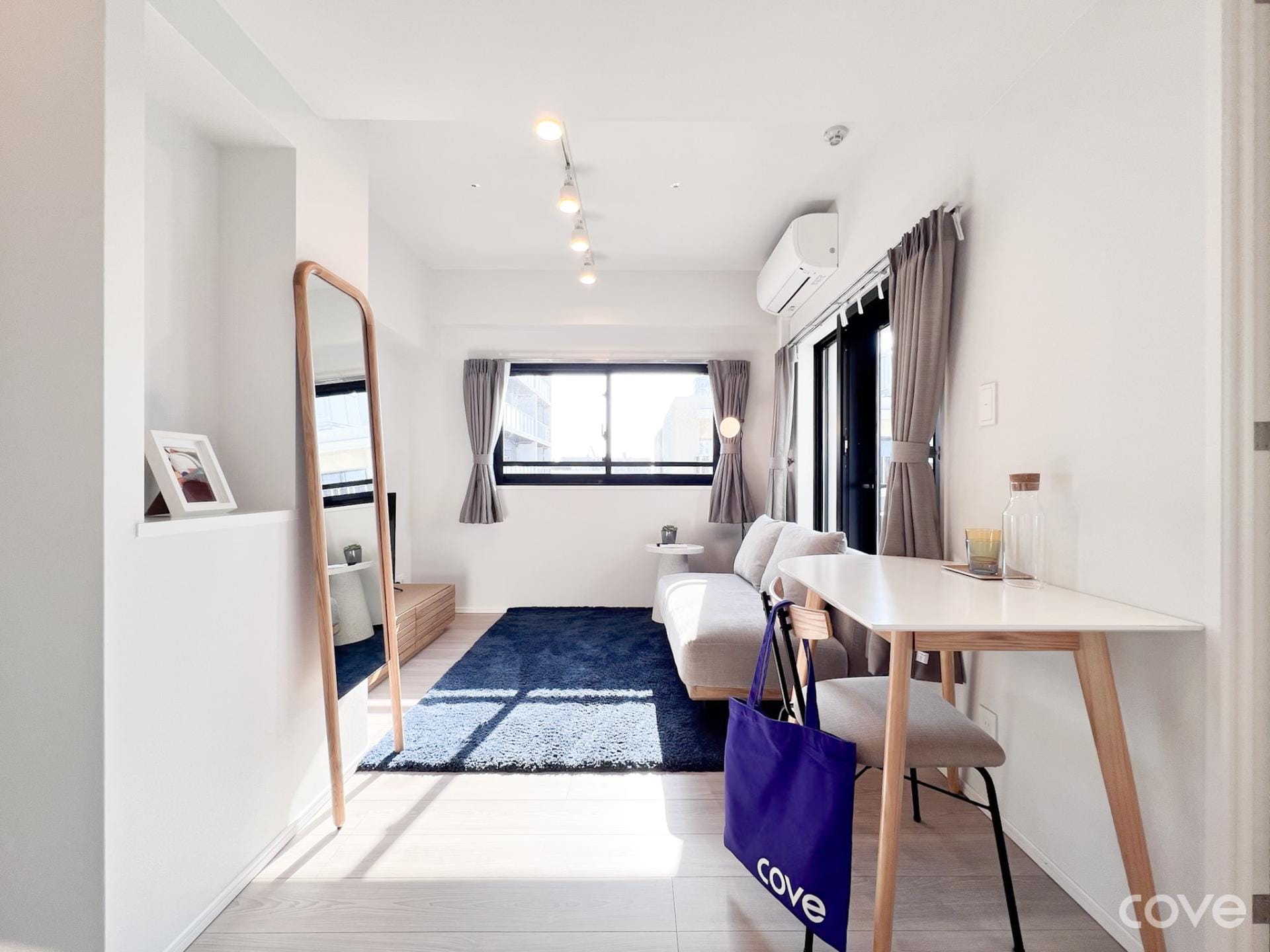
TL;DR
- A 1LDK in Tokyo is a one-bedroom apartment with a separate Living-Dining-Kitchen room, typically 30 to 50 square metres total.
- 1LDK rent in Tokyo ranges from ¥75,000/month in outer wards like Katsushika up to ¥322,000/month in Minato. The 23-ward average is around ¥113,000.
- 1LDK is the most popular layout for couples, remote workers, and solo professionals who want a real bedroom-living separation.
- The LDK area must be at least 8 tatami mats by Japanese real estate convention, large enough for a sofa, dining table, and desk.
- Furnished 1LDKs (like Cove's 1LDK apartments in Tokyo) are the fastest path for foreigners arriving without a Japanese guarantor or wanting to skip the ¥400,000+ initial fees.
What Is a 1LDK Apartment?
A 1LDK is a Japanese apartment layout with one separate bedroom plus a combined Living, Dining, and Kitchen room. The "1" is the bedroom count. The L, D, and K are one shared room, not three.
In Tokyo's rental market, 1LDK is the layout most foreigners settle into within their first year or two. It's the standard couple's apartment, the upgrade most solo renters target after a year in a 1K, and the minimum sensible layout for full-time remote work. Our complete guide to Japanese apartment layouts walks through 1R, 1K, 1DK, and 2LDK in full.
One technical detail worth flagging: by Japan Real Estate Transaction Association (JRTA) convention, the LDK in a 1LDK must be at least 8 tatami mats (roughly 13 square metres). If the LDK is smaller, the unit is technically a 1DK no matter how the listing is marketed. This matters when comparing units, since some "1LDKs" are dressed-up 1DKs.
1LDK vs nearest layouts
Feature | 1DK | 1LDK | 2LDK |
Rooms | 1 + dining-kitchen | 1 + living-dining-kitchen | 2 + living-dining-kitchen |
Total size | 23 to 35 sqm | 30 to 50 sqm | 50 to 80 sqm |
LDK size | 4.5 to 7 tatami | 8+ tatami | 10+ tatami |
Best for | Solo cooks | Couples, WFH, solo upgrade | Families, roommates |
How Big Is a 1LDK in Tokyo, Really?
A 1LDK apartment in Tokyo typically measures 30 to 50 square metres total, with 40 sqm being the most common size. That total includes everything inside your front door: bedroom, LDK, kitchen counter, bathroom, hallway, and the genkan where you take off your shoes.
A typical 40 sqm 1LDK breaks down roughly like this: a 10 to 12 sqm bedroom, a 14 sqm LDK, and the rest absorbed by the bathroom, kitchen footprint, and entryway. That's tight for a queen bed plus wardrobe plus desk in the bedroom, and tight for a sofa plus dining table plus workspace in the LDK. Comfortable for one person, doable for two, and uncomfortable when both partners take simultaneous calls.
This is the gap that surprises foreigners coming from larger Western homes. A 40 sqm "one-bedroom" in New York or Berlin would feel spacious; in Tokyo it feels efficient. If you and a partner both work from home full-time, push to a 45+ sqm 1LDK or step up to a 2LDK.
Two structural details that matter more than total size
- Bedroom door type. Hinged doors give true sound and smell separation. Sliding paper doors (fusuma) seal poorly. Check the floor plan for door type before signing.
- LDK shape. A long, narrow LDK with awkward furniture flow loses to a square LDK that's 2 sqm smaller. Look at the madori (floor plan), not just the photos.
Who Should Rent a 1LDK (and What to Watch Out For)
A 1LDK suits couples, remote workers on a one-person schedule, and solo professionals on stays of a year or longer. It's the layout most expats land in after a year or two of renting in Tokyo.
The clear yeses
- Couples (no kids). 1LDK is the default Tokyo couple layout. Bedroom for sleep, LDK for shared living.
- Solo professionals upgrading from a 1K. Bedroom-living separation is the single biggest quality-of-life jump in Tokyo apartment hunting.
- One person working from home. The LDK absorbs a small desk; the bedroom stays a bedroom.
- Solo expats on 1+ year contracts. The daily quality-of-life delta from a 1K is worth the extra ¥40,000 to ¥80,000/month over 12+ months.
The maybes
- Two WFH workers. Tight but possible if one of you takes calls in the bedroom. If both have heavy meeting loads, push to 2LDK.
- Couple with one infant. Doable for the first year. Plan to upgrade to 2LDK by year two as the child needs their own space.
The clear nos
- Roommates. You'd be sharing the bedroom or the LDK. Either way uncomfortable. Skip to 2LDK.
- Solo + frequent overnight guests. A sofa bed in the LDK works for occasional guests, not regular ones.
Trade-offs to plan for
- WFH limit for two people. A 40 sqm 1LDK is uncomfortable when both partners take simultaneous calls. Mitigation: choose a 45+ sqm unit, or pick a building with a coworking lounge.
- LDK shape lottery. Some 1LDKs have awkward narrow LDKs that lose to smaller-but-square ones. Mitigation: always view the floor plan or do a video tour before signing.
- Older 1LDKs have thin walls. 1990s wooden buildings have notoriously poor soundproofing. Mitigation: filter for RC (reinforced concrete) and post-2000 builds.
- Storage gap. Many 1LDKs have one small bedroom closet and no LDK storage. Mitigation: budget for a wardrobe and kitchen storage cabinet, or pick a unit with a built-in oshiire.
How Much Does a 1LDK Cost in Tokyo?
A 1LDK apartment in Tokyo costs between ¥75,000 and ¥330,000 per month depending on ward, with the 23-ward average around ¥113,000. The spread between cheapest and priciest ward is roughly 4x, so neighbourhood selection matters more than layout selection within a neighbourhood.
Monthly rent ranges by ward (2026)
Tier | Example wards | 1LDK monthly | Notes |
Premium | Minato, Shibuya, Chiyoda | ¥200,000 to ¥330,000 | Minato average ¥322K |
Central | Shinjuku, Meguro, Setagaya | ¥150,000 to ¥220,000 | Sweet spot for most expats |
Mid | Nakano, Bunkyo, Sumida | ¥110,000 to ¥160,000 | Good value with central access |
Outer | Adachi, Katsushika, Edogawa | ¥75,000 to ¥110,000 | Cheapest in the 23 wards |
For premium options across Tokyo, see Cove's luxury apartments in Tokyo.
The total move-in cost reality
Tokyo 1LDK move-in costs run ¥600,000 to ¥900,000 in cash on day one for a ¥150,000/month apartment. The breakdown:
- Shikikin (deposit): 1 to 2 months rent, partially refundable.
- Reikin (key money): 1 to 2 months, NOT refundable.
- Agency fee: 0.5 to 1 month plus tax.
- Guarantor company: 0.5 to 1 month, mandatory without a Japanese guarantor.
- First month rent + utility setup: another ¥160K to ¥170K.
For premium 1LDKs at ¥250,000+ rent, total initial costs cross ¥1 million regularly. This is the single most-shared shock in r/japanlife threads about Tokyo apartment hunting. For the full process, see our guide to renting an apartment in Japan as a foreigner.
The furnished alternative
Cove's furnished 1LDK apartments include all furniture, utilities, and Wi-Fi in one monthly figure. No key money, no Japanese guarantor required, no utility setup paperwork. Best fit: stays of 1 to 24 months where time and certainty matter more than the lowest possible monthly rate.
Best Tokyo Neighbourhoods for 1LDK Renters
The best Tokyo neighbourhoods for 1LDK renters combine residential calm with strong rail access. Cove operates fully furnished 1LDK-style apartments across eight Tokyo neighbourhoods, each suited to a different lifestyle:
Neighbourhood | Best for | Vibe |
Yoyogi (Shibuya ward) | Couples wanting central access without central noise | Green and vibrant; one stop from Harajuku, two from Shibuya on the JR Yamanote Line |
Ebisu (Shibuya ward) | Professionals and creatives seeking upscale calm | Cosmopolitan luxury; Michelin dining and Ebisu Garden Place; JR Yamanote and Hibiya lines |
Komaba (Meguro ward) | Quieter alternative near Shibuya | Calm academic neighbourhood; 3 minutes (two stations) from Shibuya |
Senzoku (Meguro ward) | Renters wanting nature plus city access | Peaceful and green; Senzokuike Pond, cherry blossoms, refined community |
Kiyosumi (Kōtō ward) | Best 1LDK value with character | Calm streets, hip cafés, and cultural landmarks; Kiyosumi-Shirakawa's coffee scene |
Kinshichō (Sumida ward) | Strong commute access without central rent | Tradition meets modern convenience; near Tokyo Skytree and Sumida River |
Asakusa (Taito ward) | Renters drawn to heritage Tokyo | Heritage and modern urban living; Ginza, Asakusa, and Tobu Skytree lines |
Okachimachi (Taito ward) | Central Tokyo at a lower price point | Historic charm with modern convenience; near Ueno Park and Akihabara |
Other widely recommended 1LDK rental areas include Bunkyo (Hongo, Korakuen) for academic quiet, Setagaya for leafy residential calm, and Jiyugaoka for couple-favourite boutique-and-café streets. Cove's nearest equivalents are Komaba and Senzoku in Meguro ward.
How to Find Your 1LDK in Tokyo
Renting a 1LDK in Tokyo follows six steps: budget, layout priority, neighbourhood, building filters, furnished decision, and platform choice.
- Set your real budget: monthly rent plus a ¥600,000 initial-fees buffer. Or skip both with a furnished option.
- Decide bedroom-vs-LDK priority: do you need a workable WFH desk in the LDK, or is the bedroom your main daily space?
- Pick two to three neighbourhoods using the table above. Weight commute and walkability heavily.
- Filter for building age and construction: post-2000, RC, hinged bedroom door (not fusuma).
- Decide furnished versus unfurnished. Be honest about how long you'll stay and how much furniture-shopping bandwidth you have.
- Use a foreigner-friendly platform. Most Japanese listing sites are Japanese-only and many landlords decline foreign applicants at the application stage.
For the full rental process from documents to deposit to move-in, see our guide to renting an apartment in Japan as a foreigner. Or skip the entire paperwork gauntlet and browse Cove's 1LDK apartments in Tokyo, all foreigner-friendly, fully furnished, and free of key money or guarantor requirements.
Frequently Asked Questions
What does 1LDK mean?
1LDK means one separate bedroom plus a combined Living, Dining, and Kitchen area. The LDK must be at least 8 tatami mats (roughly 13 sqm) by Japan Real Estate Transaction Association convention to legitimately be called a 1LDK.
What does 4LDK mean in Japan?
4LDK means four separate bedrooms plus a combined Living, Dining, and Kitchen room. The numbering convention (1LDK, 2LDK, 3LDK, 4LDK) always refers to bedroom count plus a single shared LDK space, not the total room count. 4LDK is family-sized and uncommon in central Tokyo; most 4LDK listings are in suburban wards or detached houses.
How big is a 1LDK in Tokyo?
A 1LDK in Tokyo typically measures 30 to 50 sqm total, averaging around 40 sqm. The bedroom is usually 6 to 8 tatami (10 to 13 sqm); the LDK absorbs the remainder of the unit.
Is a 1LDK okay for two people?
Yes for most couples. A 40 sqm 1LDK comfortably fits two people's daily routines. It gets tight if both partners work from home full-time on simultaneous calls; in that case consider a 45+ sqm unit or a 2LDK.
How much does a 1LDK cost to rent in Tokyo?
A 1LDK in Tokyo costs ¥75,000 to ¥330,000 per month depending on ward. The 23-ward average is around ¥113,000. Central premium wards (Minato, Shibuya) hit the top of the range; outer wards (Adachi, Katsushika) sit at the bottom.
Do I need a Japanese guarantor for a 1LDK?
Usually yes. Most landlords require either a Japanese guarantor or a guarantor company (which charges 0.5 to 1 month rent). Furnished options designed for foreigners typically bypass this requirement entirely.