
Studio Apartments in Tokyo (1K & 1DK): A Foreigner's Guide
Tokyo studios are 1K or 1DK apartments, 13 to 35 sqm, with rents from ¥55,000 to ¥130,000. A practical guide for foreigners on choosing one.

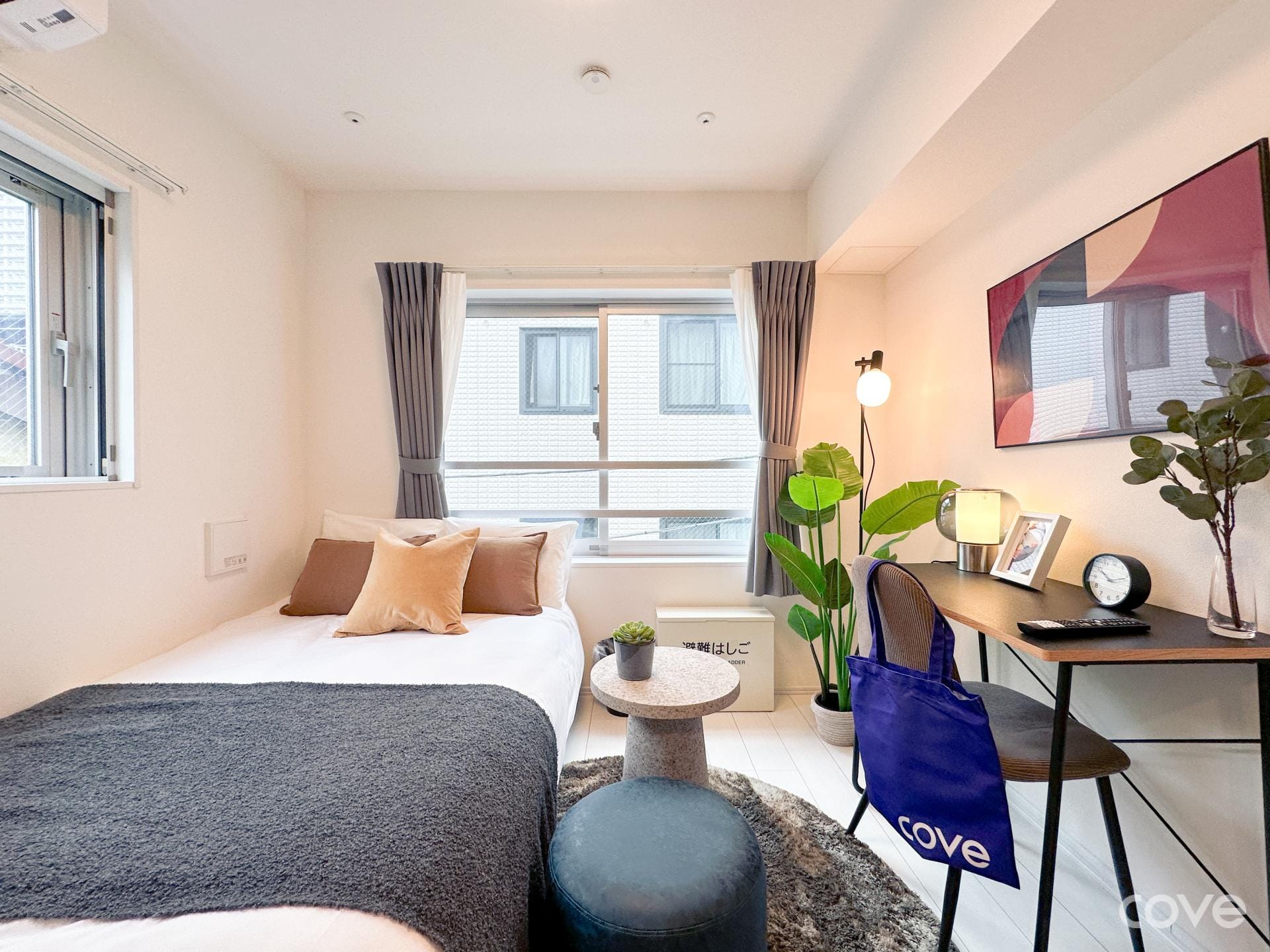
TL;DR 📚
- In Japan, what foreigners call a "studio" is actually a 1K (kitchen separated by a wall) or a 1DK (kitchen plus a small dining area). Both run 13 to 35 square metres.
- Monthly rent for a Tokyo studio ranges from ¥55,000 in outer wards to over ¥120,000 in central wards like Shibuya or Shinjuku.
- The square metres listed include the kitchen, bathroom, and hallway. Your actual living space is usually 60 to 70 percent of that figure.
- 1K is the most popular layout for solo renters in Tokyo. 1DK suits people who cook often or want a little separation between bed and stove.
- Furnished studios that bypass key money and a Japanese guarantor (like Cove's service apartments) are the fastest path for foreigners arriving in Japan.
1. What Counts as a "Studio" in Tokyo?
If you're searching for a studio apartment in Tokyo, you've probably already noticed that nothing is actually labelled "studio." Japan uses its own apartment code system, and the closest equivalents to a Western studio are 1K and 1DK.
The difference between them is mostly about where the kitchen sits. A 1K is one main room with a kitchen tucked behind a wall or door, usually near the entrance. A 1DK is one room plus a kitchen-and-dining area large enough for a small table. Both technically count as studios in the way most foreigners use the word: one private living space, with no separate bedroom.
If you want the full breakdown of every Japanese apartment code (1R, K, D, L, S, and the more complex layouts), our complete guide to Japanese apartment layouts walks through all of them. This article focuses on what you actually need to know to choose between 1K and 1DK as a studio renter in Tokyo.
There's one more layout worth mentioning briefly: the 1R, which has the kitchen inside the main room with no wall separation. Most foreigners searching for a "studio" don't actually want a 1R, the cooking smells alone make it tough. We'll mostly talk about 1K and 1DK from here.
Quick comparison: 1R vs 1K vs 1DK
Feature | 1R | 1K | 1DK |
Kitchen placement | Inside main room | Behind wall/door | Separate dining-kitchen |
Total size | 13–20 sqm | 18–25 sqm | 23–35 sqm |
Cooking smells | Linger in bedroom | Mostly contained | Fully contained |
Best for | Short-term, light cookers | Most solo Tokyo renters | Solo cookers, light WFH |
2. How Big Is a Tokyo Studio Really?
Here's the thing nobody tells you upfront: the square metres on a Tokyo apartment listing include everything inside the front door. That means your kitchen, your bathroom, your hallway, and the little entryway where you take off your shoes are all counted in the total.
A "25 sqm 1K" might give you only 12 to 15 sqm of actual living room space.
For a 1K, total floor area runs from 13 to 25 sqm. For a 1DK, it's 23 to 35 sqm. Subtract roughly 30 to 40 percent for the parts you don't sit in, and you get a more honest number.
To put 18 sqm of usable space in perspective: you can fit a queen bed, one armchair, and a small TV stand. A dining table is a stretch unless you give up the armchair.
A few practical tips that come up repeatedly in r/japanlife discussions
- Always look at the floor plan (called a madori in Japanese), not just the listing photos. Wide-angle lenses make rooms look noticeably larger than they are.
- The biggest deciding feature for liveability under 25 sqm is the kitchen wall. Foreigners who downsized from larger Western homes consistently report that a 1K's kitchen separation is what makes the space feel like a home rather than a dorm.
- Older buildings often pack more into less square footage; newer buildings tend to feel more spacious for the same listed sqm. Construction year matters more than you'd think.
3. Who Should Rent a Tokyo Studio?
A studio is not a one-size-fits-all answer. Here's how to know if it's the right call.
You'll likely be happy with a Tokyo studio if you
- Live alone and prioritise being central over having space.
- Spend most of your day at work, in cafes, or out, your apartment is mostly for sleeping and laundry.
- Are on a one to two year stay and don't want to commit to bigger rent.
- Are a solo professional, student, or digital nomad without a partner planning to move in.
You'll probably regret a studio if you
- Cook elaborate meals every day. Even with a 1K wall, your bedroom will absorb the smells.
- Work from home full-time and need a defined separation between desk and bed.
- Have a partner who'll be living with you for more than a few months.
- Own more than two pieces of substantial furniture.
If you're a couple
If you're a couple looking at studios because they're cheaper, here's a gentle reality check: most Tokyo couples settle into a 1LDK within their first year together. Two people in a 1K usually works for about three months before the storage shortage and lack of separation start to grate. If you're already at that conversation, our 1-bedroom (1LDK) guide is probably more relevant.
4. The Real-World Pros and Cons
What follows comes from foreigners who've actually lived through Tokyo studio life, pulled from r/japanlife, r/movingtojapan, and r/Tokyo discussion threads. Every con has a workable mitigation; we've paired them so this section stays useful, not discouraging.
The genuine wins
- Lower monthly rent commitment, which is what makes testing a neighbourhood for a year before upgrading actually doable.
- Faster to furnish and move in. Less stuff to source, less time spent assembling.
- Easier to clean. A studio takes 30 minutes; a 2LDK takes most of a Sunday.
- Studios are how Tokyo packs people into the most desirable wards. You can live in Shibuya or Shinjuku at studio rent that simply isn't possible at 1LDK rent.
- Lower utility bills, smaller spaces heat and cool faster, and you'll feel the difference in a Tokyo winter.
The trade-offs nobody warns you about
Cooking smells in a 1K. Even with the kitchen wall, ramen and curry will linger in your bedroom for hours. The mitigation: pick a 1DK instead of a 1K, or invest in a strong range hood and an air purifier.
Thin walls in older buildings. Wooden construction (mokuzou) from the 1990s and earlier has notoriously poor soundproofing. You'll hear your neighbour's TV through the wall. Mitigation: filter your search for RC (reinforced concrete) buildings, ideally post-2000.
Storage shortage. Closets vary wildly between Tokyo studios, some have a generous oshiire (built-in closet), others have nothing. Mitigation: check the floor plan for a closet symbol before signing.
The listing photos always exaggerate. Wide-angle lenses make 18 sqm look like 30. Mitigation: view in person if you can, or insist on a video tour. The madori doesn't lie.
Initial fees are the real shock. Foreigners on r/Tokyo regularly report ¥320,000+ in initial fees on an ¥80,000/month apartment, key money, deposit, agency fee, and guarantor company. We'll cover this in detail in the next section.
5. How Much Does a Tokyo Studio Cost?
There are two cost stories that matter here: monthly rent (which most guides cover) and total move-in cost (which most guides bury). The second one is what surprises people.
Monthly rent ranges by ward (2026)
Ward tier | Example wards | 1K monthly | 1DK monthly |
Central / premium | Shibuya, Minato, Shinjuku | ¥85,000 – ¥130,000 | ¥110,000 – ¥170,000 |
Mid-range | Nakano, Bunkyo, Sumida | ¥70,000 – ¥100,000 | ¥90,000 – ¥130,000 |
Outer | Adachi, Katsushika, Edogawa | ¥55,000 – ¥85,000 | ¥75,000 – ¥110,000 |
Within any single ward, the spread is wide; building age, station distance, and floor matter more than the ward average suggests.
The total move-in cost reality
This is where Tokyo rentals get expensive in a way most newcomers don't expect. The deposit isn't the big number, the package of fees you owe before you receive the keys is.
For an ¥80,000/month studio, a typical move-in package looks like this:
- Shikikin (security deposit): one to two months rent. ¥80,000 to ¥160,000, partially refundable.
- Reikin (key money): one to two months rent. ¥80,000 to ¥160,000, NOT refundable. This is a one-time gift to the landlord.
- Agency fee: 0.5 to 1 month rent. ¥40,000 to ¥80,000, plus tax.
- Guarantor company fee: 0.5 to 1 month rent. ¥40,000 to ¥80,000, mandatory if you don't have a Japanese guarantor.
- First month rent + utility setup: typically ¥90,000 to ¥100,000.
That's roughly ¥320,000 to ¥600,000 in cash on day one for an ¥80,000/month apartment. The shock is real and consistent across r/japanlife threads.
The furnished alternative
For foreigners arriving without a Japanese guarantor or without ¥500,000 cash to drop on day one, the furnished apartment route exists. Cove's furnished studios in Tokyo include all furniture, utilities, Wi-Fi, and (for select properties) housekeeping in a single monthly rate.
The trade-off is a higher monthly figure, Cove sits in the premium end of Tokyo's furnished market because the build quality and location quality match, but you skip the key money, the guarantor company, the utility paperwork, and the four-week furniture-shopping marathon. For people whose time is more constrained than their budget, that's the equation.
If you're only in Tokyo for a few months at a time, monthly apartments for foreigners are a more flexible variant of the same furnished model.
6. Best Tokyo Neighbourhoods for Studio Renters
Choosing a neighbourhood matters more for studio renters than most people realise, when your apartment is small, your neighbourhood becomes part of your living room.
A few areas worth considering:
Asakusa. Old-Tokyo character with a growing café and gallery scene. 1DK stock here often runs better-value than west-side wards with similar rent. If you're drawn to the Sumida River, temples, and a slightly slower pace, this is your area. Browse Cove's furnished apartments in Asakusa.
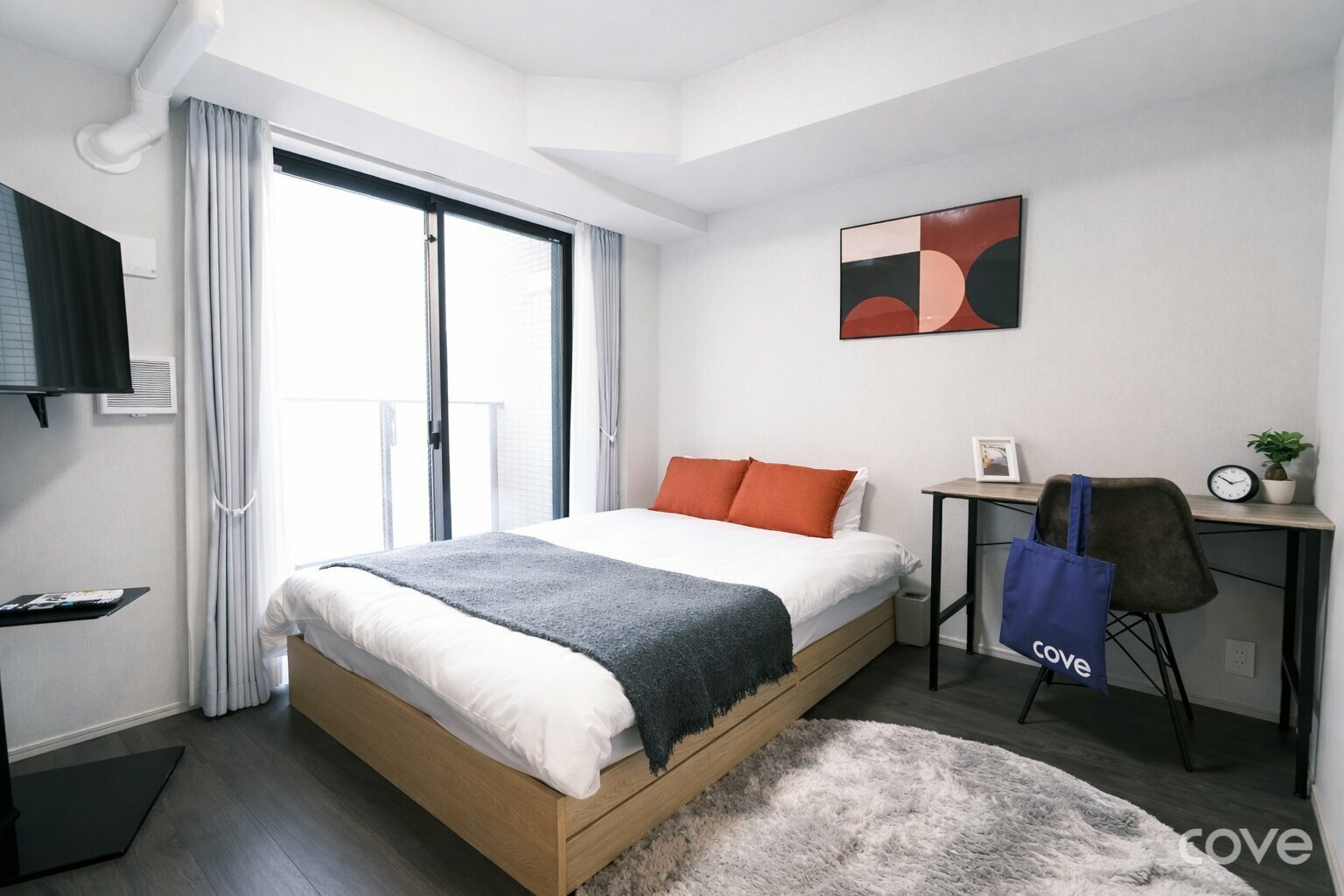
Kinshicho. Direct access to Shinjuku and Shibuya without paying central rent. The neighbourhood itself has been quietly upgrading for the last decade. See Kinshicho apartments for rent.
Yoyogi. Right next to Shinjuku and Harajuku, surprisingly residential once you get a few minutes away from the station. Strong choice for solo professionals who want central access without central noise. Browse Yoyogi apartments for rent.
Kiyosumi-Shirakawa. East Tokyo's emerging arts and coffee neighbourhood, with character that the west-side wards lost to franchise creep. Often the best 1DK value with personality. See Kiyosumi apartments for rent.
Nakano. Ten minutes from Shinjuku at meaningfully lower rent. The unofficial home of solo Tokyo professionals on a tighter budget. Heavy on subculture, light on chain stores.
Shibuya and Shinjuku themselves. Studio stock is high in both, and you'll pay for the location. Worth it if your daily commute and lifestyle access genuinely require central, not worth it if you're just paying for the postcode.
7. How to Find Your Studio in Tokyo
Five steps from "I'm researching" to "I'm ready to view":
- Set your real budget. Monthly rent plus a ¥300,000+ buffer for initial fees. Or skip both with a furnished option.
- Decide between 1K and 1DK based on how much you cook and whether you need a separate dining space.
- Pick two to three candidate neighbourhoods. Weight your weekday commute first, weekend lifestyle second.
- Decide furnished versus unfurnished. Be honest about how long you'll stay and how much furniture-shopping bandwidth you have.
- Use a foreigner-friendly platform. The major Japanese listing sites are Japanese-only and many landlords decline foreign applicants at the application stage.
If you'd rather skip the entire paperwork gauntlet, browse Cove's service apartment options in Tokyo. Most are studios, all are foreigner-friendly, and none require key money or a Japanese guarantor.
8. Frequently Asked Questions
What's the difference between a 1K and a 1DK?
A 1K has a kitchen separated by a wall but no dining space. A 1DK has a kitchen plus a dining area large enough for a small table. 1DK is typically 5 to 10 sqm larger and better for people who cook regularly without wanting cooking smells in the bedroom.
How small are Tokyo studios really?
Total floor area runs 13 to 25 sqm for a 1K and 23 to 35 sqm for a 1DK. But listed sqm includes the bathroom and kitchen, so usable living space is closer to 60 to 70 percent of the listed figure. A 25 sqm 1K typically gives you 12 to 15 sqm of actual living room.
Can two people live in a Tokyo studio?
Short answer: yes for a 1DK in the short term, no comfortably for a 1K. Many couples try and most upgrade to a 1LDK within six to twelve months. If you're already a couple, looking at 1LDK first will save you a move.
Are furnished studios in Tokyo worth it?
Yes if you'll be in Tokyo one to twenty-four months, want to skip ~¥300,000 in initial fees, or are arriving from abroad without a Japanese guarantor. The trade-off is a higher monthly rate. For shorter stays, the time and cash savings usually justify it.
What's the average rent for a studio in Tokyo?
¥55,000 to ¥130,000 per month depending on ward. Central premium wards like Shibuya and Minato hit the top of that range; outer wards like Adachi and Katsushika sit at the bottom. Most expat-friendly studios in central wards land between ¥80,000 and ¥110,000.