
1R, 1K, 1DK, 1LDK: Japanese Apartment Layouts Explained (With Sizes & Rent)

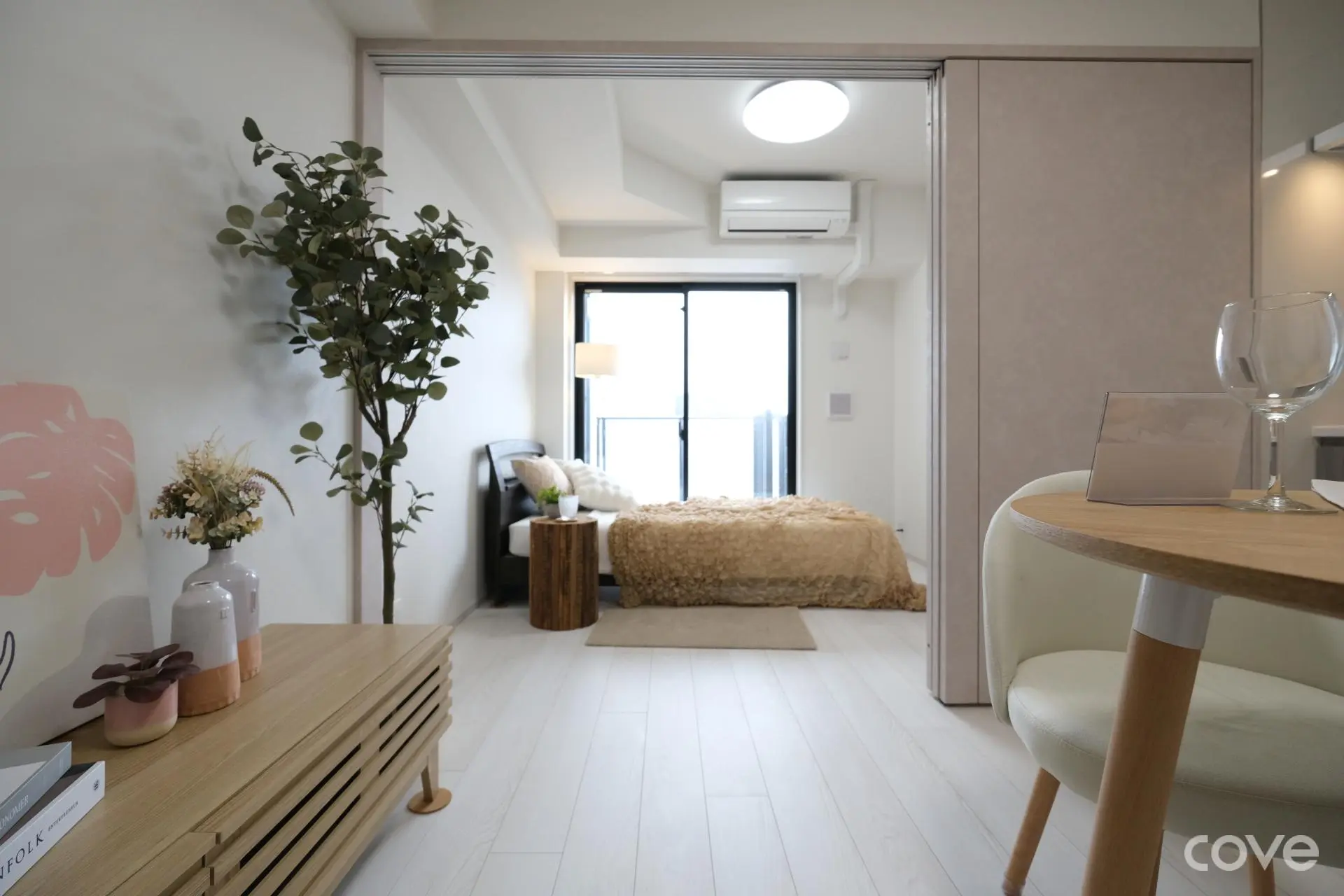
Apartment listings in Japan don't use "1 bedroom" or "studio" the way most countries do. Instead, you'll see codes like 1R, 1K, 1DK, and 1LDK. If you've ever stared at a Japanese real estate listing and wondered what these letters mean, this guide will clear things up. We'll break down each layout type, how big they actually are, what they cost in Tokyo, and which one makes sense for your situation. And if you're a foreigner looking for apartments, we also cover what to know about renting in Tokyo as a non-Japanese resident.
How to Read Japanese Apartment Layout Codes
The system is simpler than it looks. Every Japanese apartment listing uses a combination of a number and letters.
The number tells you how many separate rooms the apartment has, not counting the kitchen or bathroom. The letters describe the shared living spaces that come with those rooms.
Here's what each letter stands for:
- R (Room): One open space where you sleep, eat, and cook. No walls separating anything.
- K (Kitchen): A kitchen area separated from the main room, usually by a wall or door.
- D (Dining): The kitchen area is large enough to fit a dining table.
- L (Living): A full living room is included on top of the dining and kitchen space.
Put them together and you get the apartment's layout code:
- 1R = 1 room, everything in one space
- 1K = 1 room + a separate kitchen
- 1DK = 1 room + a dining-kitchen area
- 1LDK = 1 room + a living-dining-kitchen area
- 2LDK = 2 rooms + a living-dining-kitchen area
One important thing to note: the number refers to rooms, not bedrooms. A 2LDK has 2 separate rooms plus the LDK area, giving you 3 usable spaces in total.
Now let's look at each layout in detail.
1R (One Room): The Basic Studio
A 1R is the simplest apartment in Japan. "R" stands for Room, and that's exactly what you get: one single space. Your kitchen, bed, desk, and everything else share the same room with no dividing walls.
Typical size: 13 to 20 sqm
What to expect:
A small kitchenette sits near the entrance, usually with a single-burner stove and a compact sink. The bathroom is typically a "unit bath" (more on this below), meaning the toilet, sink, and bathtub are all packed into one small waterproof room. Storage is minimal. Most 1R apartments don't have built-in closets, so you'll need a clothing rack or freestanding wardrobe.
The biggest downside of a 1R is the lack of separation between the kitchen and living space. If you cook fish or curry for dinner, your bedsheets will absorb the smell. There's no door to close.
Best for: Students, budget-conscious singles, and people who eat out more than they cook.
1K (One Room + Kitchen): The Upgraded Studio
A 1K looks a lot like a 1R, with one critical difference: a wall or door separates the kitchen from the main room. "K" stands for Kitchen.
Typical size: 18 to 25 sqm
What to expect:
The kitchen area is separated from the living space, which keeps cooking smells out of your sleeping area. However, the kitchen in a 1K is often quite small, sometimes little more than a narrow corridor leading to the main room. The main room itself is usually similar in size to a 1R.
Closet space varies. Some 1Ks have a built-in closet, others don't, so always check the floor plan. Unit baths are still common in cheaper 1Ks, though more modern buildings may have a separated toilet and bathroom.
The 1K is the most popular apartment layout in Tokyo. It strikes the right balance between affordability and livability for a single person.
Best for:
Singles and young professionals. If you cook at home even occasionally, the wall between the kitchen and your room makes a noticeable difference compared to a 1R.
Pro tip: Kitchen sizes in 1K apartments vary dramatically. Some have barely enough space to stand while cooking. Don't just look at the total sqm; check the floor plan to see how much kitchen space you're actually getting.
1DK (One Room + Dining Kitchen): Room to Breathe
A 1DK is a step up in space. "D" stands for Dining and "K" for Kitchen. This layout gives you two distinct areas: a bedroom or living room, and a kitchen-dining space large enough for a small table.
Typical size: 25 to 35 sqm
The technical rule: For an apartment to qualify as "DK" instead of just "K," the kitchen area must be at least 4.5 tatami mats in size (about 7.3 sqm). Anything smaller is classified as a 1K.
What to expect:
You can eat and cook in a separate space from where you sleep. The bathroom and toilet are usually separate at this size, so no more unit bath. Built-in closets become more common, and some 1DKs even have generous storage.
One thing to be aware of: many 1DK apartments are found in older buildings from the 1980s and 1990s. This means you often get more space for your money, but the trade-off might be older insulation, less modern fixtures, or tatami-mat rooms instead of flooring.
Best for: Singles who want more living space, people who work from home, or couples on a budget.
Pro tip: A 2DK (two rooms + dining-kitchen) is often cheaper than a 1LDK but gives you nearly the same usable space. You can use one room as a bedroom and the other as a living room. It's one of the best value-for-money hacks in Tokyo apartment hunting.
1LDK (One Room + Living Dining Kitchen): The Proper One-Bedroom
A 1LDK is what most people outside Japan would call a one-bedroom apartment. "L" stands for Living, "D" for Dining, and "K" for Kitchen. You get a separate bedroom plus a combined living room, dining area, and kitchen.
Typical size: 35 to 50 sqm
The technical rule: The LDK area must be at least 8 tatami mats (about 13 sqm) to qualify as "LDK" rather than "DK."
What to expect:
This is the first layout where you get genuine separation between your bedroom and living space. The LDK area is usually large enough for a couch, a dining table, and a kitchen with proper counter space. Bathroom and toilet are almost always separate. Built-in closets are standard. Newer 1LDKs often come with modern features like auto-fill bathtubs, intercom systems, and separate washroom areas.
In Tokyo, a 1LDK is considered spacious for a single person and comfortable for a couple. If you work from home, this is the minimum layout to seriously consider, because you can close the bedroom door and work in the living area without your desk being next to your bed.
Best for: Couples, professionals, remote workers, and anyone who values having real living space. If you're specifically looking for 1LDK options, you can browse 1LDK apartments in Tokyo here.
Beyond 1LDK: 2LDK, 3LDK, and Larger
Once you go past 1LDK, the pattern continues logically:
A 2LDK has two separate rooms plus a living-dining-kitchen area. This works well for small families, couples who want a home office, or roommates. Typical size is 45 to 65 sqm.
A 3LDK has three rooms plus the LDK. This is a standard family-sized apartment. Typical size is 60 to 80 sqm.
At these sizes, you're almost always looking at a "manshon" (a reinforced concrete building, usually mid-rise or high-rise) rather than an "apaato" (a lighter wood-frame building, typically 2-3 stories). The distinction matters because manshons generally offer better soundproofing, earthquake resistance, and shared building amenities like elevators and auto-lock entry systems.
Other Codes You'll See on Listings
Beyond the main layout codes, there are a few extra abbreviations that pop up frequently on Japanese listings.
S (Service Room): A room that doesn't meet building code requirements for a proper "living" room, usually because it lacks sufficient windows or ventilation. It can range from a small storage closet to a room almost as big as a bedroom. A 1SLDK is essentially a 2LDK at a lower price since the S room isn't officially counted as living space. If the S room is large enough, you can use it as a bedroom or home office.
RF (Roof Floor) or Loft: A raised platform or mezzanine, usually accessible by ladder. It's not counted as living space and is technically meant for storage, but many people sleep up there. One caveat: lofts get extremely hot during Tokyo summers since heat rises.
UB (Unit Bath): A prefabricated waterproof room that combines the toilet, bathtub, and sink into one compact space. Common in 1R and cheaper 1K apartments. Most people prefer "B/T separate" (bath and toilet in different rooms), but a unit bath isn't terrible if your budget is tight.
WIC (Walk-in Closet): A proper walk-in closet. Considered a luxury in Tokyo's smaller apartments and is a selling point in 1LDK and larger units.
PS (Pipe Space): This isn't a room. It's where the building's plumbing runs through. You'll see it on floor plans, but you can ignore it entirely.
How to Read Japanese Floor Plans
If you browse listings on Japanese sites like Suumo or Homes.co.jp, you'll run into floor plans labeled entirely in Japanese. Even if you don't read Japanese, knowing a handful of common terms will help you understand what you're looking at.
Here are the labels you'll see most often:
- 洋室 (youshitsu): Western-style room with wooden or vinyl flooring
- 和室 (washitsu): Japanese-style room with tatami mats
- 玄関 (genkan): The entrance or entryway where you remove your shoes
- 押入 (oshiire): A Japanese-style closet, typically deeper than a Western closet, designed for storing futons
- クローゼット (kuroozetto): A standard Western-style closet
- 浴室 (yokushitsu): Bathroom (the room with the bathtub/shower)
- トイレ (toire): Toilet room
- 洗面所 (senmenjo): The washroom or vanity area, usually between the hallway and the bathroom
- バルコニー (barukonii): Balcony
- 収納 (shuunou): Storage space
- 洗濯機置場 (sentakuki okiba): Washing machine space
That last one is especially important. Always check whether the apartment has space for a washing machine inside the unit. Some 1R and smaller 1K apartments don't, which means you'll rely on coin laundry or a shared laundry room in the building.
How Much Does Each Layout Cost in Tokyo?
Here's what none of the other apartment layout guides tell you: what you'll actually pay. Rent in Tokyo varies significantly depending on location. Here's a breakdown based on publicly available market data from major Japanese real estate platforms as of early 2026.
Central wards (Chiyoda, Chuo, Minato, Shinjuku, Shibuya): These are Tokyo's most premium areas. If you're looking at higher-end options here, see luxury apartments in Tokyo.
| Layout | Size | Rent Range |
|---|---|---|
| 1R | 13-20 sqm | ¥95,000 - ¥150,000 |
| 1K | 18-25 sqm | ¥100,000 - ¥140,000 |
| 1DK | 25-35 sqm | ¥120,000 - ¥170,000 |
| 1LDK | 35-50 sqm | ¥190,000 - ¥300,000 |
| 2LDK | 45-65 sqm | ¥280,000 - ¥400,000+ |
Mid-range wards (Meguro, Taito, Shinagawa, Bunkyo, Toshima):
| Layout | Size | Rent Range |
|---|---|---|
| 1R | 13-20 sqm | ¥75,000 - ¥100,000 |
| 1K | 18-25 sqm | ¥80,000 - ¥110,000 |
| 1DK | 25-35 sqm | ¥90,000 - ¥130,000 |
| 1LDK | 35-50 sqm | ¥140,000 - ¥200,000 |
| 2LDK | 45-65 sqm | ¥200,000 - ¥280,000 |
Affordable wards (Sumida, Koto, Adachi, Katsushika, Nerima, Edogawa):
| Layout | Size | Rent Range |
|---|---|---|
| 1R | 13-20 sqm | ¥60,000 - ¥80,000 |
| 1K | 18-25 sqm | ¥65,000 - ¥85,000 |
| 1DK | 25-35 sqm | ¥75,000 - ¥100,000 |
| 1LDK | 35-50 sqm | ¥100,000 - ¥140,000 |
| 2LDK | 45-65 sqm | ¥140,000 - ¥200,000 |
These are base rent figures only. For traditional leases, expect to add ¥10,000 to ¥20,000 per month for utilities (electricity, gas, water) and ¥3,000 to ¥5,000 for internet. Some listings also include a monthly management fee (管理費) of ¥3,000 to ¥15,000 on top of rent. On top of the monthly costs, traditional leases in Japan require significant upfront fees including key money and a guarantee company fee. Furnished apartments and serviced apartments typically include utilities and internet in the monthly price, with lower upfront costs.
Keep in mind that building age, distance to the nearest station, and the specific block within a ward all affect pricing. A brand-new 1K five minutes from a Yamanote Line station will cost significantly more than a 30-year-old 1K fifteen minutes from a local line station in the same ward.
Which Layout Should You Choose?
The right layout depends on your budget, your lifestyle, and how long you plan to stay. Here's a quick guide:
| Your Situation | Recommended Layout | Why |
|---|---|---|
| Student on a tight budget | 1R or 1K | Cheapest option that's functional for one person |
| Single professional | 1K or 1DK | Good balance of space and cost |
| Remote worker or WFH | 1DK or 1LDK | You need separation between work and sleep |
| Couple | 1LDK or 2DK | Enough space for two, with a separate bedroom |
| Couple with a child | 2LDK | Minimum comfortable size for a small family |
| Short-term stay (1-6 months) | Furnished 1K or 1LDK | Skip buying furniture, flexible lease terms |
If you're on a tighter budget and open to shared living, share houses are another option worth exploring. They offer private rooms with shared common areas at significantly lower price points.
If you're moving to Tokyo for the first time and you're not sure how long you'll stay, consider starting with a furnished apartment on a flexible monthly lease. It lets you experience the city and figure out which neighborhood you like before locking into a 2-year traditional lease. You can always move to a bigger or more permanent place once you've settled in.
Wrapping Up
Japanese apartment layout codes are straightforward once you know the system. The letters tell you what spaces you're getting, the number tells you how many rooms, and the size in square meters tells you how much space you're actually working with. Combine that with the rent ranges above and you'll be able to read any Tokyo apartment listing with confidence.
If you're looking for furnished apartments in Tokyo with flexible lease terms and no complicated setup fees, take a look at what's available at Cove. Our apartments range from studios to 1LDK layouts across multiple Tokyo neighborhoods including Kinshicho, Kiyosumi-Shirakawa, and Komaba, and you can move in with just a suitcase. Browse all available apartments here.
Rent data in this article is based on publicly available market information from Japanese real estate platforms including Suumo, At Home, and E-Housing, as of early 2026. Prices are approximate and vary by building age, distance to station, and specific location.