
How to Rent an Apartment in Japan as a Foreigner (2026 Guide)

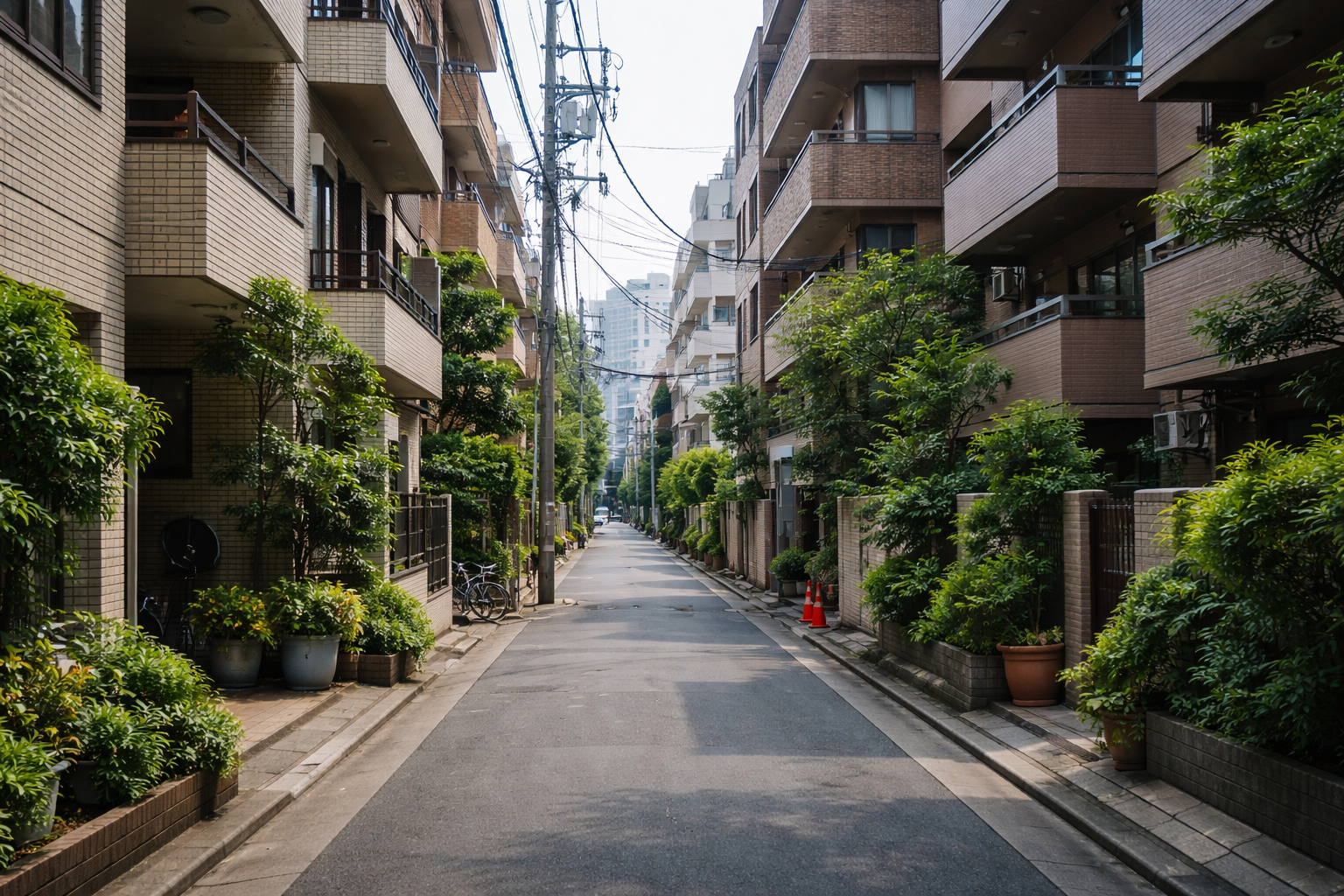
Renting an apartment in Japan is very different from what you might be used to. You'll come across unfamiliar fees, unexpected paperwork, and a guarantor system that can make things tricky from the start, unlike renting anywhere else in the world. There are fees you've never heard of, documents you didn't know you needed, and a guarantor system that can stop your application before it starts.The good news is that thousands of foreigners rent apartments in Japan every year. The process is manageable if you know what to expect.This guide covers every step, whether you're already in Japan or still planning your move from overseas. We also cover what to do if you're coming on Japan's digital nomad visa and can't access the regular rental market at all.
Why renting in Japan is different for foreigners.
Japan's rental system includes some features that often surprise newcomers.
- The guarantor system: Almost every standard lease requires a guarantor (保証人, hoshōnin), which is someone who pays your rent if you can't. This person must be a Japanese citizen with a stable income. If you don't have a guarantor, you'll need to use a guarantor company (保証会社), which usually charges 50 to 100 percent of one month's rent.
- Key money: In addition to your deposit, many landlords charge key money (礼金, reikin), which is a non-refundable “thank you” payment equal to one or two months' rent. Not every property requires it, but it's still common.
- Foreigner discrimination: No laws stop landlords from refusing tenants based on nationality. Some listings even say “no foreigners.” It's frustrating, but it happens, which is why foreigner-friendly agencies are important.
- Language barriers: Most contracts and agencies use Japanese. There are some English-speaking agencies in Tokyo and Osaka, but they are rare.
- 2-year standard lease: Most contracts last two years. You can usually end the lease early, but there may be penalties, which isn't ideal if you plan a shorter stay.
Types of rental housing — which one fits you?
Japan has several housing options, each with different trade-offs.
Regular apartments (アパート / マンション)
These have the lowest monthly rent but the highest upfront costs. Expect to pay four to six months' rent before moving in. Apartments are often completely empty, with no furniture, appliances, or even light fixtures. You'll need a residence card, a guarantor, and a Japanese bank account. Leases usually last two years.
Serviced apartments
Serviced apartments are fully furnished and offer flexible terms, usually starting from one month. They include furniture, appliances, internet, and often utilities. Most do not require a guarantor, and many accept tenants without a residence card. The monthly rent is higher, but for stays under one or two years, the total cost is often lower since you avoid key money, agent fees, and buying furniture.
Monthly mansions (マンスリーマンション)
Monthly mansions are similar to serviced apartments. They are furnished, short-term rentals designed for stays of one to twelve months. Utilities are usually included in the rent. They are popular with business travelers and people who need a temporary place while looking for something permanent.
Share houses
Share houses are the most affordable option. You get a private room and share the kitchen, bathroom, and living room. They are furnished, have flexible contracts, and offer a strong sense of community. Monthly costs in Tokyo can range from ¥40,000 to ¥70,000. They are a good choice if you value social connections more than privacy.
Documents you'll need
What you need depends on your visa type, and most guides don't explain this clearly.
Work visa or permanent residency
- Residence card (在留カード)
- Proof of income (employment contract or salary statement)
- Japanese phone number
- Japanese bank account
- Emergency contact in Japan
- Seal certificate (印鑑証明書) — less common now, but some landlords still ask
Student visa
- Residence card
- Student enrollment certificate
- Proof of scholarship or financial support
- Guarantor (your university can often provide this)
Digital nomad visa
- Passport only — you won't receive a residence card
- The standard rental process is not available to you (more on this below)
Applying from outside Japan
- Passport copy
- Certificate of Eligibility or visa application form
- Proof of income from your home country
- Credit card from your home country (for platforms that accept it)
Most traditional agencies won't process overseas applications. You'll need platforms specifically built for remote booking.
The rental process, step by step
Here's how renting a standard apartment works. The whole process typically takes 2–6 weeks.
- Set your budget. As a rule of thumb, your rent should not be more than one-third of your monthly income. Many landlords are strict about this. Also, add ¥10,000 to ¥20,000 per month for utilities.
- Choose your area. Think about your commute, how close you are to a train station, and access to supermarkets and hospitals. (We cover Tokyo neighborhoods at the end of this article.)
- Search online. SUUMO and HOME'S have the widest selection. For English-friendly options, try GaijinPot Apartments, Apartment Japan, or BEST-ESTATE.JP.
- Contact real estate agents. Visiting in person usually gives the best results. Look for agencies that offer English support. Some may refuse to work with foreigners, which is unfortunately common.
- View properties. Check for natural light, noise levels, storage, mobile signal inside the unit, and how far it is to the nearest station. Japanese apartments are often smaller than you might expect, so always visit in person if you can.
- Apply. Submit your documents and wait for screening, which usually takes a few days to a week. The landlord and guarantor company will check your employment, income, and background.
- Sign the lease. The contract will be in Japanese. Get a translation or ask someone to review the key terms, especially the early termination clause, renewal fees, and move-out conditions.
- Pay all upfront costs and move in. You must pay all fees before you receive the keys. After moving in, set up electricity, gas, water, and internet separately. Register your address at your local ward office (区役所) within 14 days.
Hidden costs — what you'll actually pay
This is where Japan's rental system catches people off guard. Here's the full list of upfront fees:
- Key money (礼金): 0–2 months' rent — non-refundable
- Security deposit (敷金): 1–2 months' rent — partially refundable at move-out
- Agent fee (仲介手数料): 1 month's rent + 10% tax
- Guarantor company fee (保証料): 0.5–1 months' rent
- Fire insurance (火災保险): ¥15,000–25,000 for two years
- Lock change fee (鍵交換費): ¥10,000–20,000
- First month's rent: due upfront, pro-rated if you move in mid-month
What this actually looks like: a 1K apartment in Shinjuku at ¥90,000/month
Fee | Amount |
| Key money (1 month) | ¥90,000 |
| Deposit (1 month) | ¥90,000 |
| Agent fee (1 month + 10% tax) | ¥99,000 |
| Guarantor company fee (0.5 month) | ¥45,000 |
| Fire insurance (2-year policy) | ¥20,000 |
| Lock change fee | ¥16,500 |
| First month's rent | ¥90,000 |
Total move-in cost | ¥450,500 |
That's roughly 5x your monthly rent — before you've bought a single piece of furniture.This is why many foreigners on shorter stays find that furnished options with lower upfront costs work out cheaper overall, even if the monthly rent is higher.
Renting before you arrive in Japan
Most guides assume you're already in Japan. In reality, many people need to arrange housing before they arrive, but the standard system makes this very difficult.
The chicken-and-egg problem
To rent a regular apartment, you need:
- A residence card → but you get it at the airport when you land
- A Japanese phone number → but most carriers require a residence card
- A Japanese bank account → but some banks require 6 months of residency
The bottom line is that the standard rental process is almost impossible to complete from overseas.
The solution: a two-phase approach
Phase 1 — Book a landing pad remotely (before arriving)Secure a furnished apartment or monthly mansion for your first 1–2 months. These rentals are built for this situation:
- No residence card required
- No guarantor needed
- No Japanese bank account needed
- Bookable entirely online
Expect to pay about 1.5–2x the cost of a regular apartment for this flexibility. Several platforms support remote booking, including Cove, Apartment Japan, OYO LIFE, BEST-ESTATE.JP, and Hmlet.Phase 2 — Apartment hunt in person (after arriving)Once you land, things unlock quickly:
- Day 1: receive your residence card at the airport
- Week 1: register your address at your local ward office using your landing pad address
- Week 1: get a Japanese phone number (many providers offer eSIMs you can set up immediately)
- Week 2–4: open a bank account, start your apartment search with full documentation
- Before month 2: aim to sign a permanent lease before your landing pad term expires
This approach costs more upfront, but you arrive with a furnished place ready for you. This lets you focus on settling in instead of rushing to find housing in a new city.Cove offers fully furnished apartments in Tokyo that you can book from anywhere. No guarantor or Japanese bank account is required. Browse Tokyo apartments.
Renting on Japan's digital nomad visa
Japan launched its digital nomad visa in March 2024, and there's a critical housing issue that most visa guides barely mention.
The basics
- Stay: up to 6 months, non-renewable (must wait 6 months to reapply)
- Income requirement: ¥10 million+/year (~$67,000 USD)
- Eligible countries: 49+ (US, UK, Canada, EU, Australia, Singapore, South Korea, and more)
- Insurance: private health insurance with ¥10 million+ medical coverage required
- Family: spouses and children can accompany you
The housing problem nobody warns you about
Digital nomad visa holders do not receive a residence card.This changes everything. Without a residence card, you cannot:
- Rent a standard apartment
- Open a bank account at a traditional Japanese bank
- Sign up for a regular phone contract
The entire rental infrastructure in Japan assumes you have this card. It simply doesn't accommodate this visa category.
Your actual options
- Serviced apartments are the most practical choice. They are furnished, flexible, and do not require a residence card. Basic options in Tokyo cost ¥140,000 to ¥200,000 per month, while mid-range options are ¥200,000 to ¥300,000.
- Monthly mansions — furnished, usually accept passport-only applications.
- Share houses — some operators accept residents without residence cards. Most affordable route.
- Airbnb / short-term rentals — available but prices spike during tourism peaks.
Budget reality
For a full 6-month stay in central Tokyo, budget ¥900,000–1,800,000 for housing alone. One smart strategy: split your time between Tokyo and a more affordable city like Fukuoka or Osaka, where housing costs can be 30–50% lower.
Making it work
- Get an eSIM before arriving — several providers don't require a Japanese address
- Use Wise or Revolut instead of a Japanese bank account
- Carry your passport everywhere — it's your only ID on this visa
- Book your first 1–2 months before arriving so you have a confirmed address on day one
- Know that the DN visa does not convert to other visa types from within Japan — you'd need to leave and apply separately.
Tokyo neighborhoods — a quick guide
Choosing the right area depends on your commute, lifestyle, and budget. Here's a quick look at the most popular neighborhoods for foreigners.
- Shinjuku — Tokyo's biggest transport hub. Lively, great food, strong nightlife. 1K rent: ~¥80,000–120,000.
- Shibuya — Trendy, young professional energy, strong café and coworking scene. 1K rent: ~¥90,000–140,000.
- Roppongi / Azabu — Expat-heavy, international restaurants, near embassies and international schools. 1LDK rent: ~¥150,000–300,000.
- Minato-ku — Upscale corporate district covering Roppongi, Azabu, Shinagawa. Premium pricing, great connectivity.
- Ikebukuro — Affordable with strong transport connections. Practical over glamorous. 1K rent: ~¥70,000–100,000.
- Meguro / Nakameguro — Hip, walkable, full of independent cafés and boutiques. Popular with design-minded professionals. 1K rent: ~¥90,000–130,000.
These ranges are based on publicly available market data and will vary by building age, station distance, and floor level.
Getting started
Renting in Japan takes more preparation than most countries, but it's completely manageable once you understand the system.
- On a work visa, staying long-term? A standard apartment lease gives you the best monthly rate — just budget for hefty upfront costs.
- Coming on the digital nomad visa? Furnished options with flexible terms are your path — the standard market isn't available to you.
- Still overseas? Get your landing pad sorted before you fly. Arriving with housing booked makes everything else easier.
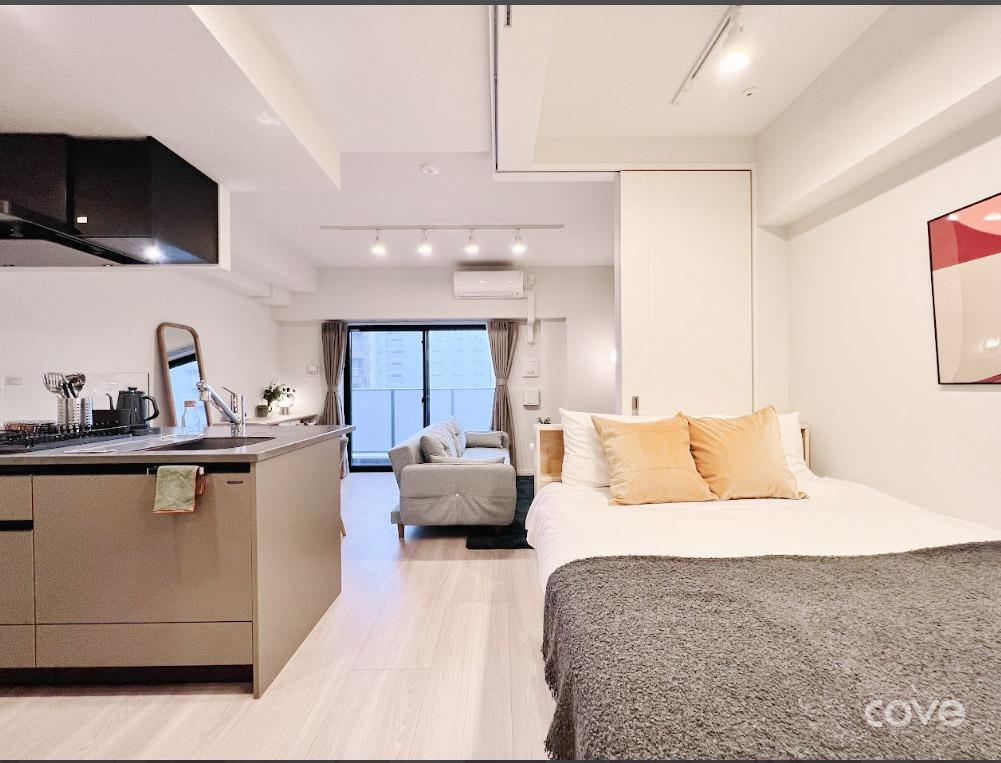
Cove offers furnished apartments across Tokyo with flexible terms, no guarantor requirement, and the ability to book online from anywhere.