
Tipping in Japan: Why You Shouldn't (and What to Do Instead)


Tipping is not customary in Japan. In most situations, leaving a tip will be politely refused or returned, and in some cases it may cause confusion or embarrassment. Japan's service culture operates on the principle of omotenashi (おもてなし), where excellent service is considered a standard part of the job, not something that requires extra payment.
This guide covers when tipping is not expected, the few exceptions where it may be appropriate, and what to do instead to show appreciation in Japan.
Why tipping is not expected in Japan
Japan does not have a tipping culture because service workers receive full wages from their employers. There is no separate lower minimum wage for servers, bartenders, or hospitality staff like in the United States. The price you pay for a meal, a taxi ride, or a hotel stay already includes the cost of service.
The concept of omotenashi plays a central role here. Omotenashi is a Japanese hospitality philosophy rooted in the tea ceremony tradition, where the host anticipates every need of the guest without expecting anything in return. Service in Japan is offered as a genuine expression of professionalism, not as a transaction.
Offering a tip can unintentionally send the wrong message. Some service workers may interpret it as implying their employer does not pay them enough. Others may feel uncomfortable because accepting a tip creates a sense of social obligation (恩, on) that conflicts with the egalitarian nature of omotenashi. In practical terms, many servers will simply assume you left your change behind and chase you down to return it.
Where tipping does not apply in Japan
Restaurants and bars
Tipping is not expected at any restaurant in Japan, from ramen shops to fine dining establishments. Bills are typically settled at the register near the entrance, not at the table. Some upscale restaurants and izakaya add a service charge (10-15%) or a small cover charge called otoshi (お通し) to the bill, but this is clearly stated and goes to the business, not individual staff.
Taxis
Taxi drivers in Japan do not expect tips. Fares are metered and precise. If you try to round up or leave extra, the driver will return the difference.
Hotels
Bellhops, front desk staff, and housekeeping at hotels do not expect tips. Higher-end hotels may include a service charge on the bill.
Hair salons and spas
Tipping is not part of the transaction at salons, barbershops, or massage establishments in Japan.
Convenience stores, cafes, and retail shops
No tipping is expected in any retail or casual food service setting in Japan.
When tipping may be appropriate in Japan
There are three situations in Japan where a small cash gift may be welcomed, though it is never required.
Ryokan with a personal attendant
At traditional Japanese inns (ryokan) where a dedicated attendant called a nakai-san serves your meals and prepares your futon, guests sometimes give a cash gift called kokorozuke (心付け). The typical amount is 1,000 to 3,000 yen per guest. Present the money in a small envelope at the beginning of your stay, not at the end.
Private tour guides and interpreters
Guides who spend a full day or multiple days with you may appreciate a tip, though it is not expected. There is no set amount. A small gift from your home country, such as local snacks or a specialty item, is also common and often preferred over cash.
Geisha entertainment
During a private dinner with a geisha (a formal and ticketed experience), guests present an envelope with a tip, typically around 3,000 yen per person, when the geisha pours the first drink. This is presented with both hands and a slight bow.
How to tip correctly in Japan
Handing over loose cash directly is considered impolite in Japan. If you decide to give kokorozuke in any of the situations above, follow these steps.
Place clean, unwrinkled bills inside a small envelope. Plain white envelopes (ポチ袋, pochibukuro) are available at any convenience store in Japan for around 100 yen. If you do not have an envelope, wrap the bills in a clean sheet of paper.
Present the envelope with both hands and a slight bow. The recipient will also receive it with both hands. Offer the envelope at the beginning of the service, not after.
What to do instead of tipping in Japan
Showing appreciation in Japan works differently than in tipping cultures. These alternatives are more meaningful and culturally appropriate.
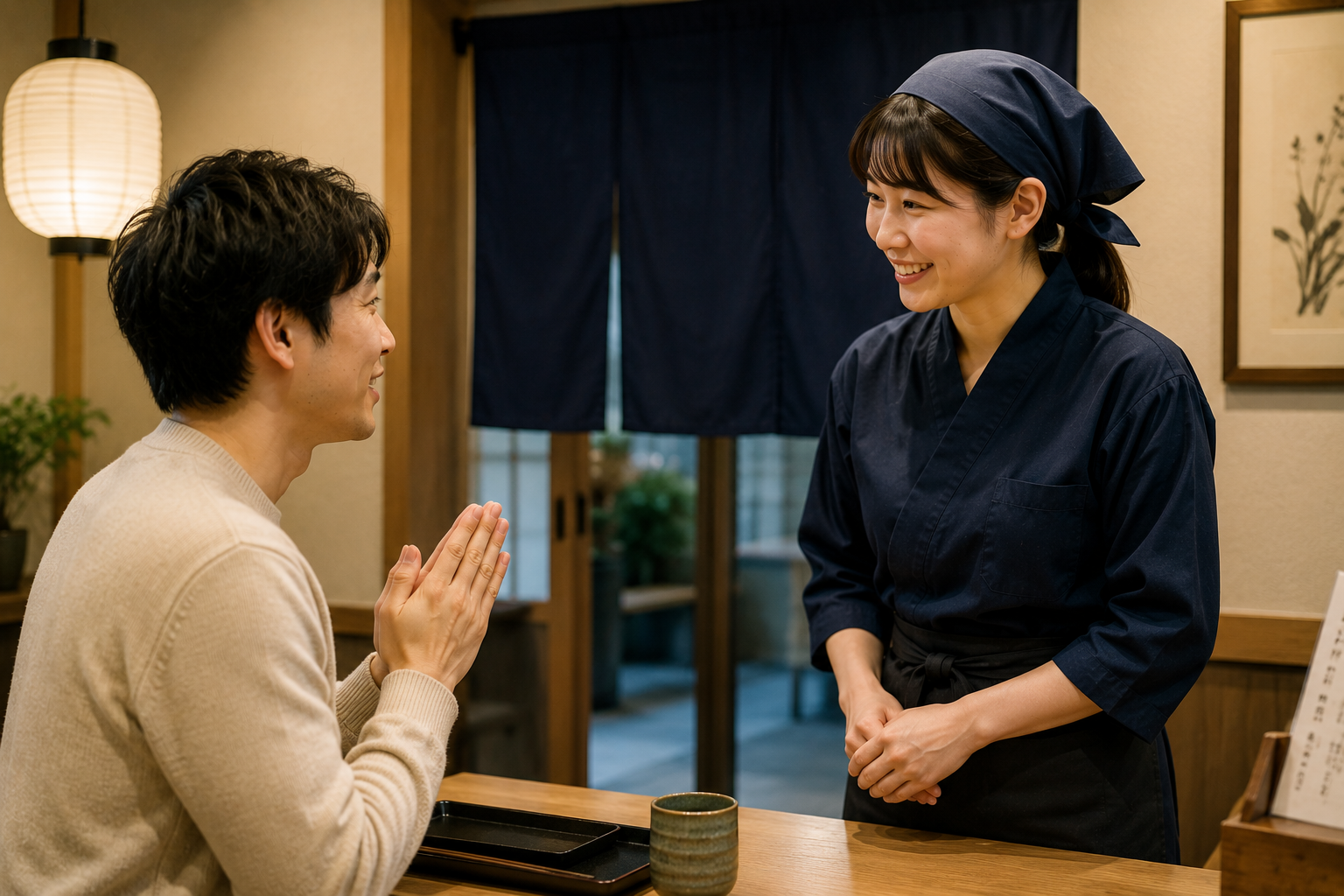
Say thank you sincerely
A clear "gochisousama deshita" (ごちそうさまでした, meaning "thank you for the meal") to restaurant staff, or "arigatou gozaimasu" (ありがとうございます) in other settings, carries real weight in Japan. Verbal gratitude is the standard way to acknowledge good service.
Leave a positive review
Online reviews on Google Maps, Tabelog, or TripAdvisor directly benefit Japanese businesses. Mentioning a specific staff member by name is particularly valued by management.
Bring a small gift
If you have built a relationship with someone, such as a regular server, a tour guide, or a ryokan owner, a small gift (omiyage) from your home country or region is a culturally fitting way to show gratitude. Food gifts in attractive packaging are the safest choice.
Use feedback forms
Some restaurants keep feedback cards on the table or near the register. A written compliment, especially one mentioning a staff member by name, is appreciated and often shared with the team.
Is it rude to tip in Japan?
Tipping in Japan is not considered outright rude in most cases, but it is unnecessary and can create an awkward moment. Service workers may politely refuse the tip or assume you accidentally left your change behind. In more traditional settings like high-end ryokan, an improperly offered tip (loose cash without an envelope) could come across as disrespectful. The safest approach is to follow local custom: enjoy the service, express your thanks verbally, and save the money.
If you are planning a move to Japan, understanding local customs like tipping etiquette is part of settling in. Our guide to the best places to live in Tokyo for foreigners covers what daily life actually looks like in each neighborhood.