
Which One to Rent? Share House vs. Unfurnished vs. Furnished Rentals

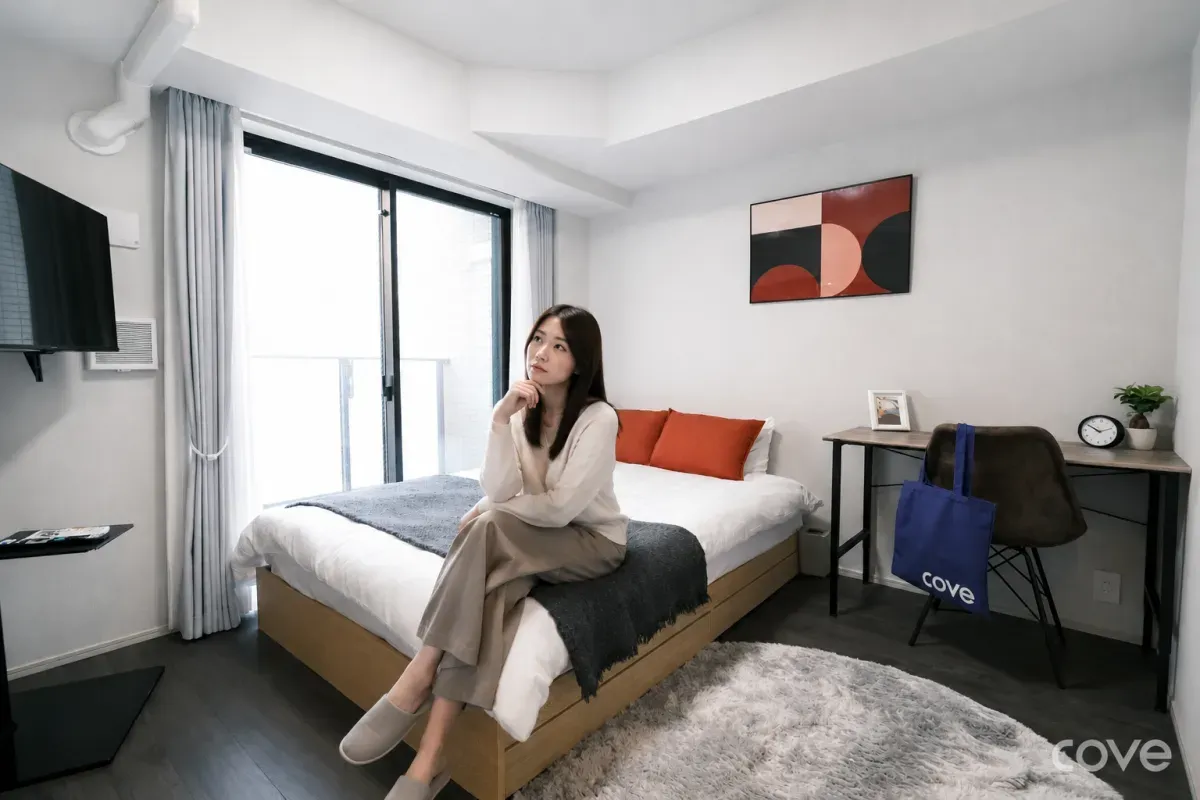
When you get a job offer in Tokyo and start preparing your visa, finding a place to live is usually the next big step. If you look at expat forums like r/japanlife, the advice often splits into two main camps: either get a room in a share house to keep initial costs low, or rent a standard unfurnished apartment and prepare for several months of rent in upfront fees.
However, there is also a third common option: renting a fully furnished apartment directly from an operator.
To help you decide what fits your budget and lifestyle best, here is a practical comparison of all three options covering upfront costs, monthly expenses, paperwork requirements, and day-to-day living.
At a glance
Quick Comparison: Tokyo Housing Options
| Feature | Share House | Unfurnished ApartmentTraditional lease | Furnished ApartmentDirect operator |
|---|---|---|---|
| Upfront cash outlay | ¥50,000 to ¥100,000First month rent plus a small deposit | 4x to 6x monthly rentDeposit, key money, agent fee, guarantor, insurance | 1.5x to 2x monthly rentFirst month rent, refundable deposit, cleaning fee |
| Furniture & appliances | ✓IncludedIn private room and shared areas | ✕NoneExpect ¥150,000 to ¥300,000 for a basic setup | ✓Fully includedMove-in ready |
| Standard lease term | Flexible1 month to 1 year | 2 yearsStandard Japanese lease | Flexible1 month to 1+ year |
| Guarantor requirement | ✓Rarely neededEmergency contact only | ✕MandatoryGuarantor company required | ✓Not requiredDirect operator screening |
| Utilities & internet | ✓IncludedIn common maintenance fee | ✕DIY setupInternet installation takes 2 to 4 weeks | ✓Ready on day 1Pre-installed |
| Renewal fees | ✓None | ✕1 month of rentKoshinryo, every 2 years | ✓None |
| Privacy level | Private bedroomShared kitchen and bathroom | Full private unit | Full private unit |
Figures are typical ranges for Tokyo as of 2026 and vary by property, ward, and operator.
1. Upfront Move-in Costs
The initial financial commitment varies significantly across each rental model.
Traditional Unfurnished Apartments
In Japan, renting an unfurnished apartment through a traditional real estate agency involves several standard fees:
- Deposit (Shikikin): 1 to 2 months of rent (refundable, minus cleaning and repair costs upon move-out).
- Key Money (Reikin): 1 to 2 months of rent (a non-refundable customary payment to the landlord). While some properties or public options like UR Housing offer zero key money, they still require strict income screening and arrive completely empty.
- Broker Fee (Chukai Tesuryo): Up to 1 month of rent plus 10% consumption tax.
- Guarantor Company Fee (Hoshonin Gaisha): 0.5 to 1 month of rent for initial enrollment.
- Fire Insurance and Lock Exchange: Approximately ¥20,000 to ¥40,000.
- Advance Rent: 1 month of rent (or prorated amount for the move-in month).
Altogether, initial fees typically total 4 to 6 times the monthly rent. For an apartment renting at ¥100,000 per month, expect an initial payment between ¥400,000 and ¥600,000 before spending an additional ¥150,000 to ¥300,000 on essential appliances, curtains, lighting fixtures, and furniture.
Share Houses
Share houses offer the lowest initial barrier to entry. Renters typically pay the first month of rent alongside a small deposit or administrative fee (often ¥20,000 to ¥30,000), keeping total move-in expenses under ¥100,000 in most areas.
Furnished Apartments (Direct Operators)
Direct operators like Cove eliminate non-refundable key money (Reikin) and agency brokerage fees. Initial payments generally consist of the first month of rent, a refundable security deposit (often equivalent to one month of rent), and a standard move-out cleaning fee. This brings total move-in cash requirements to approximately 1.5x to 2x monthly rent with no hidden agency charges.
2. Monthly Living Costs
Understanding total monthly costs requires factoring in utilities and services:
- Share House (¥50,000 to ¥85,000 per month): Rent is bundled with a fixed common service fee (Kyoieki-hi) covering electricity, water, gas, Wi-Fi, and shared household supplies.
- Unfurnished Apartment (¥75,000 to ¥130,000 base rent): On top of base rent, tenants manage their own utility contracts (around ¥12,000 to ¥18,000 per month for electricity, gas, and water) and home fiber internet (around ¥4,500 to ¥6,000 per month).
- Furnished Apartment (¥110,000 to ¥200,000+ per month): Rates vary by location. Compact units in residential or outer wards range from ¥110,000 to ¥140,000 per month, while prime central wards (such as Shinjuku, Shibuya, and Minato) generally range from ¥150,000 to ¥220,000+ per month. This figure includes furniture, appliances, maintenance, and high-speed Wi-Fi in a single bill.
3. Paperwork, Screening, and Contract Flexibility
The administrative process and contract commitments differ across options:
Traditional Rentals
Most standard leases run for 2 years under an ordinary lease contract (Futsu Shakuya Keiyaku). Landlords require a Japanese guarantor or mandatory enrollment in a rent guarantor company. Applicants must provide local contact details, Japanese bank account information, and proof of domestic employment. Canceling within the first year often triggers an early termination penalty (Tanki Kaiyaku Iyakukin) equal to one month of rent. Additionally, renewing the lease after 2 years typically incurs a renewal fee (Koshinryo) equal to one month of rent plus administrative handling fees.
Share Houses
Application requirements are straightforward. Most providers only require a valid passport, a visa, and an emergency contact. Contracts operate flexibly with monthly renewal terms.
Furnished Operators
Direct operators design their screening for international professionals and students. Necessary documents center on your passport, valid visa status, and proof of employment or academic admission. Payments can be completed online using international credit cards or Flywire, enabling you to reserve and confirm housing before entering Japan.
4. Daily Life and Practical Considerations
Share House Living
- Advantages: Immediate community, natural opportunities to make friends, and economical living.
- Considerations: Shared kitchens, bathrooms, and laundry facilities. Schedules and hygiene standards require mutual cooperation among housemates.
Private Furnished Apartment Living
- Advantages: Full personal privacy, quiet surroundings for remote work, private kitchen and bathroom facilities, and no waiting for laundry.
- Considerations: Higher monthly sticker price compared to a share house, with less built-in social interaction.
5. Summary Guide: Which Option Fits You?
Quick quiz
Which Tokyo housing option fits you?
Answer 6 quick questions and we will point you to your best match.
Consider a Share House if:
- You want the lowest initial cash outlay.
- You are staying in Tokyo for a short period (such as a working holiday or language study).
- You enjoy communal living and want a social circle right away.
Consider an Unfurnished Apartment if:
- You plan to live in Tokyo for 2 years or longer.
- You want to furnish and customize your apartment to your personal taste.
- You have domestic administrative support and are comfortable managing utility setups and 2-year lease renewals.
Consider a Furnished Apartment if:
- You work remotely and require a quiet, private workspace.
- You want a move-in ready apartment on day one without waiting weeks for internet installation or buying appliances.
- You are relocating as a couple or expect guests to stay over.
- You want lease flexibility from 1 month upward without 2-year lock-in terms or renewal fees.
6. Renting with Cove
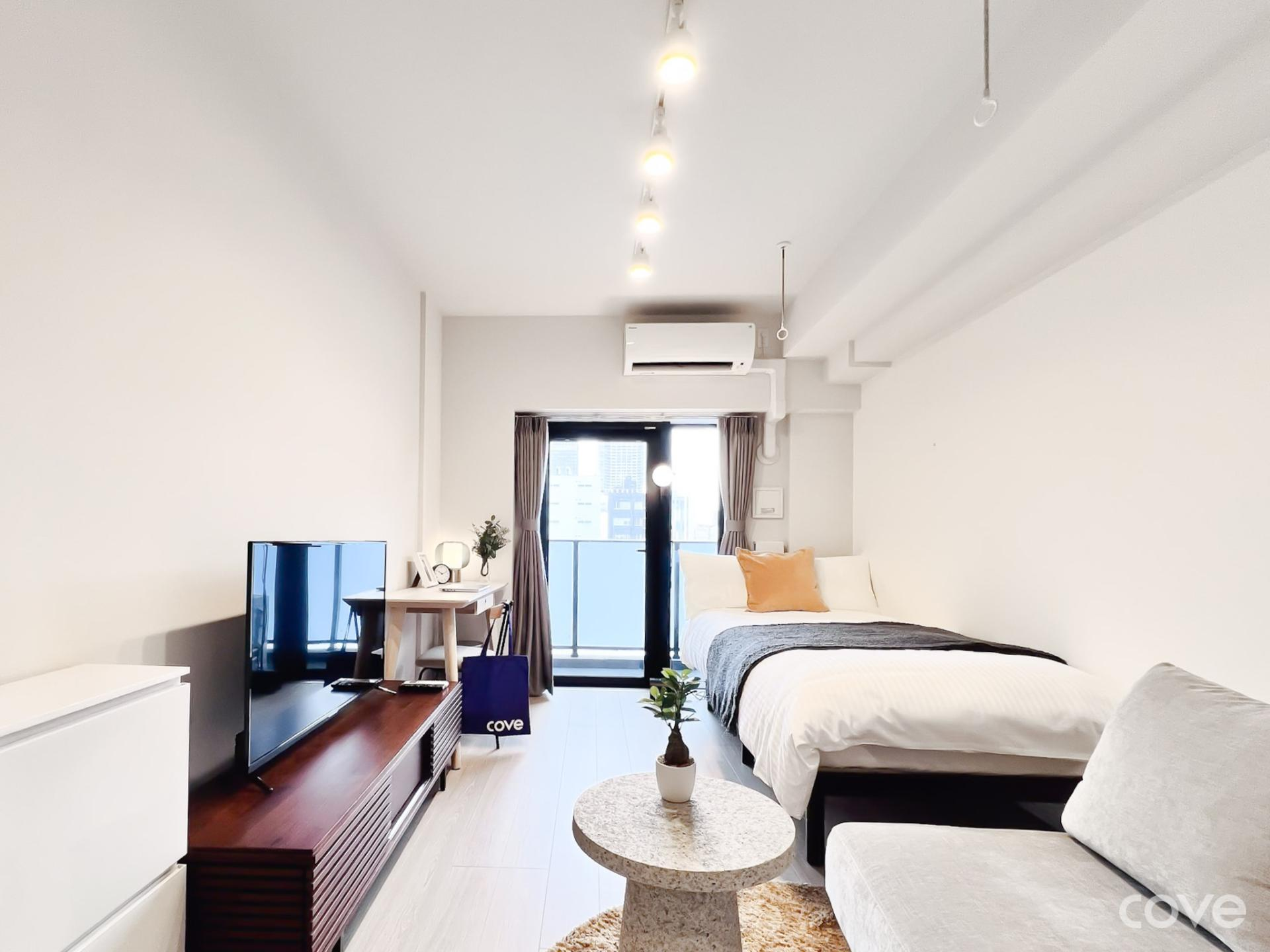
For renters seeking a private furnished apartment without traditional barriers, Cove provides:
- No key money (Reikin) and no Japanese guarantor required.
- Dedicated English-speaking support from initial inquiry to move-in.
- Move-in ready apartments with fully equipped kitchens and high-speed Wi-Fi active on arrival.
- Flexible lease terms starting from 1 month.